WHY WERE THESE CHILDREN IN AN ORPHANAGE?
A Cincinnati Family Story of Economic Hardship, Survival, and Generational Redemption
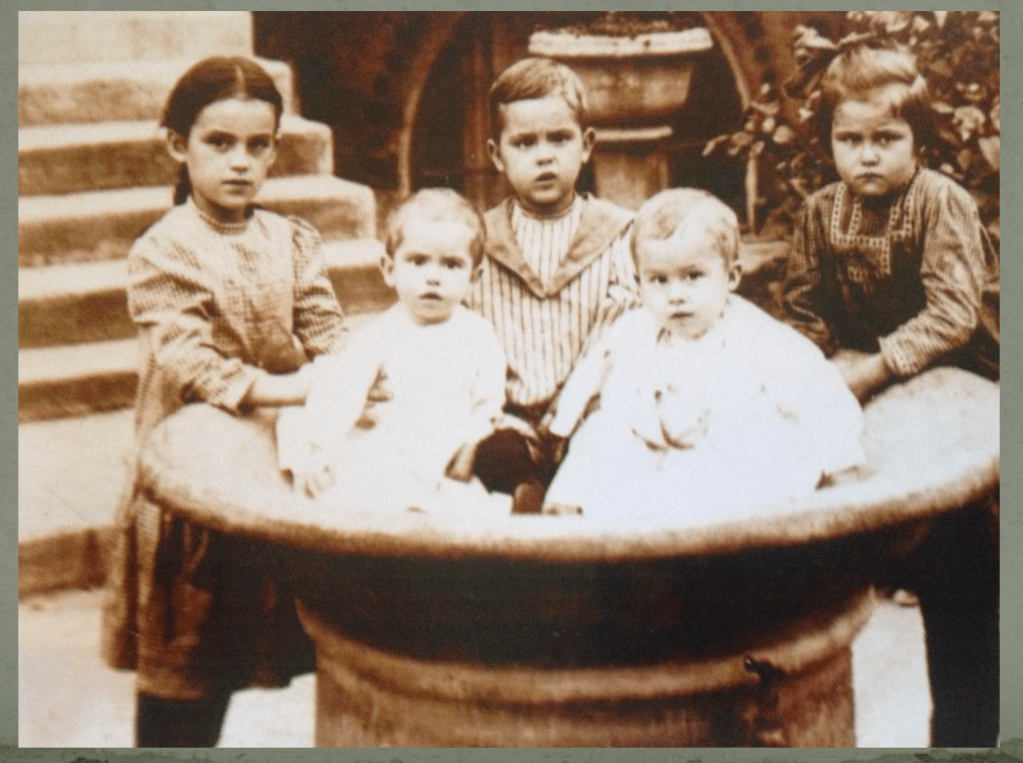
Cincinnati, Ohio — circa 1910
Five children stare into the camera.
At first glance, it is simply an old photograph from another era. But the question behind the image echoes across generations:
Why were these children living in an orphanage when both of their parents were still alive?
This story begins in the crowded immigrant neighborhoods of early twentieth-century Cincinnati. It unfolds during a period of enormous economic and technological change in America — a time when families could be pushed to the edge not through personal failure, but through forces far larger than themselves.
This is not a story about abandonment.
It is a story about survival.
It is about what human beings can endure.
A YOUNG FAMILY IN CINCINNATI
At the turn of the twentieth century, Cincinnati was booming with immigrants, industry, machine shops, railroads, river commerce, and manufacturing. German, Irish, and other immigrant families crowded into working-class neighborhoods where extended family networks often lived only blocks apart.
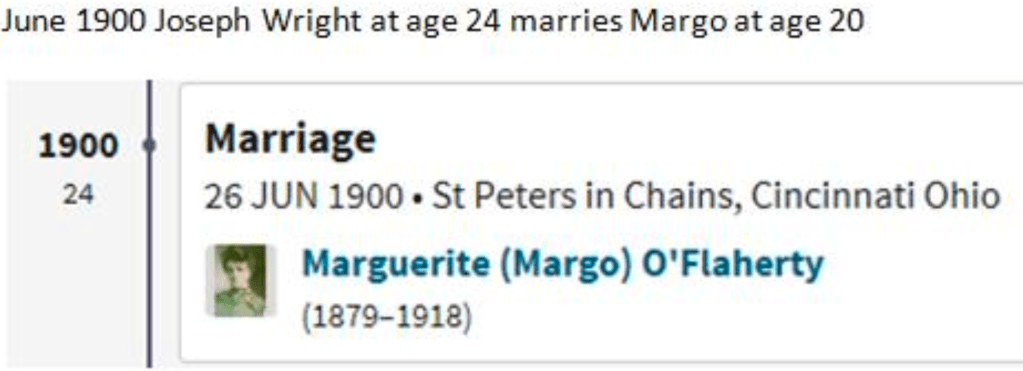
Joseph Wright and Margaret “Margo” O’Flaherty married in Cincinnati in 1900.
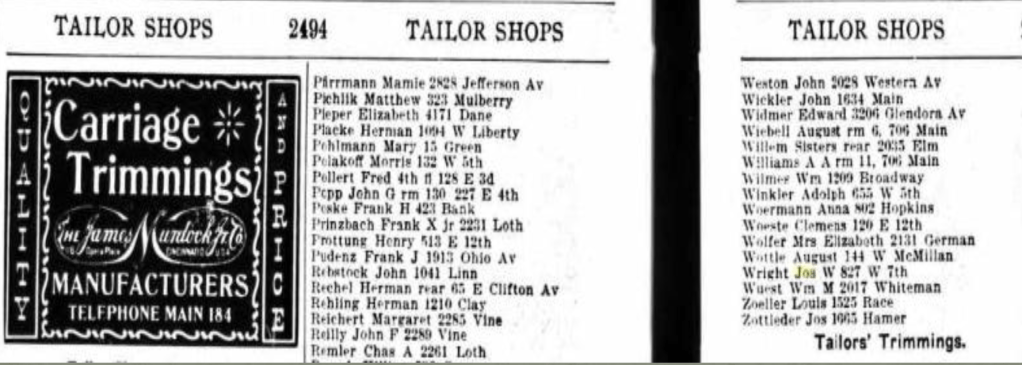
Like many immigrant families of the era, they built their lives around work, faith, family, and survival. Joseph worked in the carriage trimming trade — skilled labor tied to the horse-and-carriage economy that had dominated transportation for generations.
At first, life appeared stable.
But America itself was beginning to change.
THE WORLD CHANGES UNDERNEATH THEM
During the years between 1907 and 1911, several historical forces collided at once.
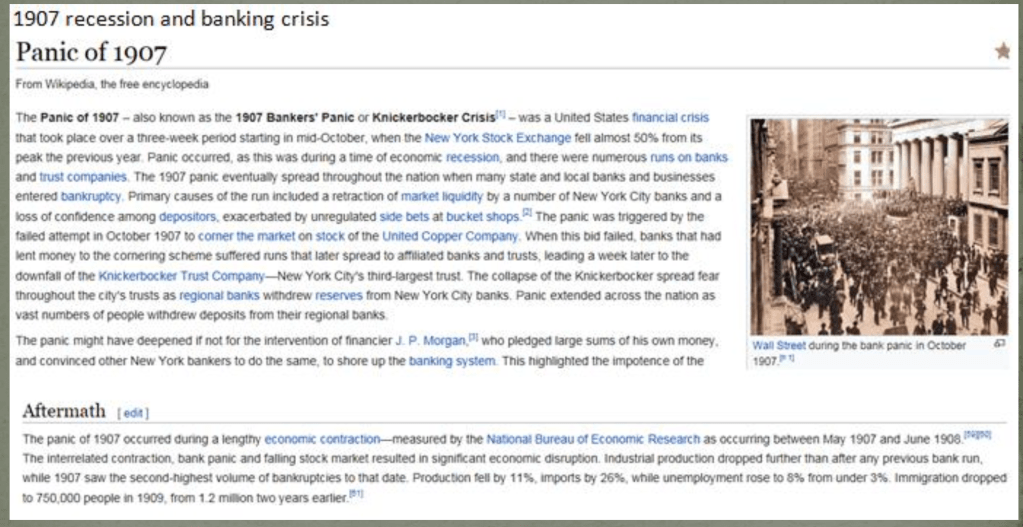
The Panic of 1907
In 1907, the United States entered a severe financial crisis. Banks failed. Businesses collapsed. Credit tightened. Unemployment spread rapidly through industrial cities like Cincinnati.
For working-class families already living close to the edge, even temporary economic disruption could become catastrophic.
At the same moment, another transformation was underway.
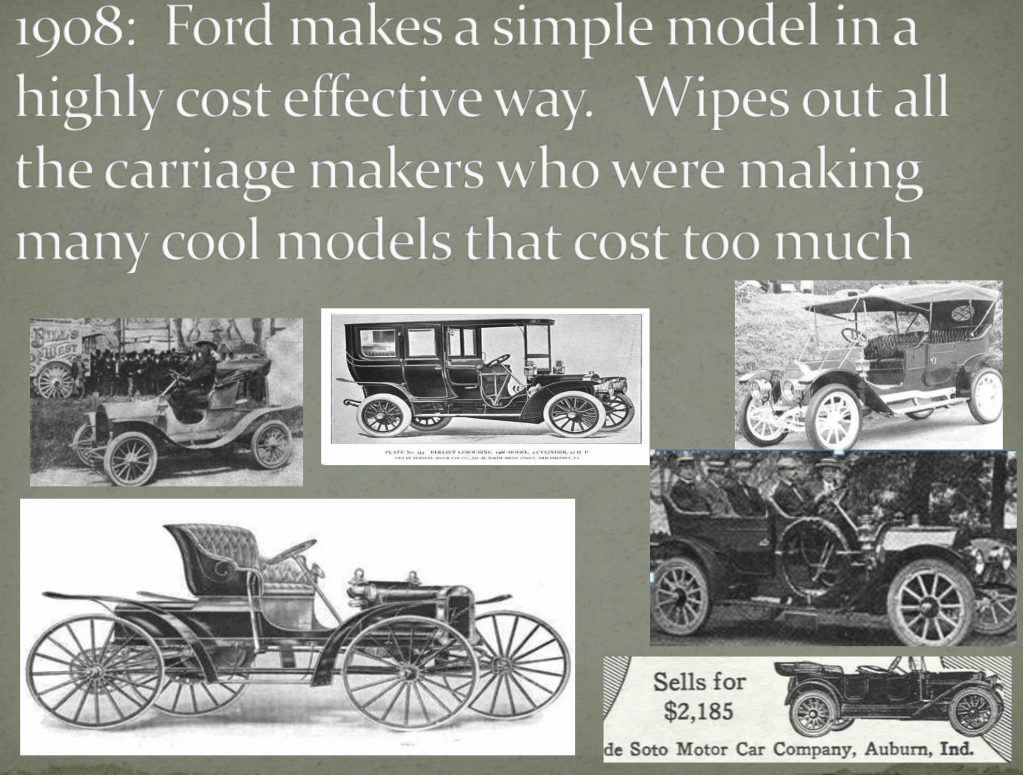
The Automobile Revolution
Henry Ford and mass automobile production were rapidly reshaping America. Skilled carriage tradesmen suddenly faced an uncertain future as horse-drawn transportation began giving way to automobiles.
Joseph Wright’s trade — once stable and respected — was becoming economically vulnerable almost overnight.
A technological revolution was quietly destroying the economic ecosystem that had supported thousands of working families.
FAMILY SUPPORT SYSTEMS BEGIN TO COLLAPSE
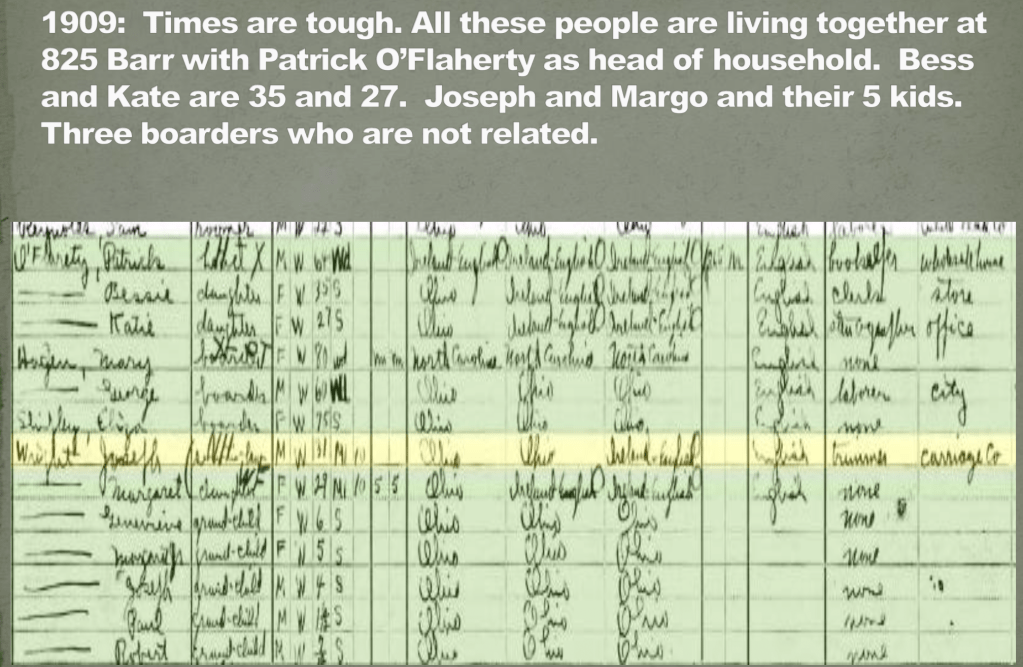
Like many immigrant families, the Wrights depended heavily upon extended family support systems.
Multiple generations often lived together:
- grandparents
- siblings
- cousins
- boarders
- wage earners
These networks acted as the social safety net before modern welfare systems existed.
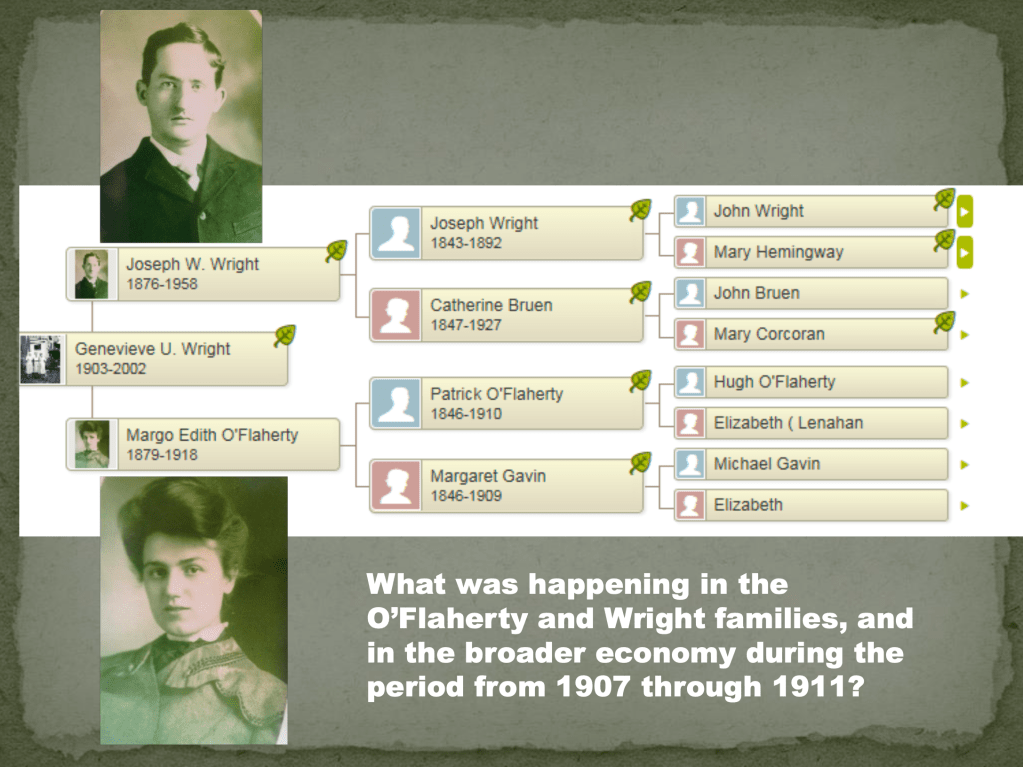
But then the family experienced devastating losses. Two deaths in 18 months. Margaret Gavin O’Flaherty dies Jan 1909, and head of household and key wage earner Patrick O’Flaherty dies in Sept 1910.
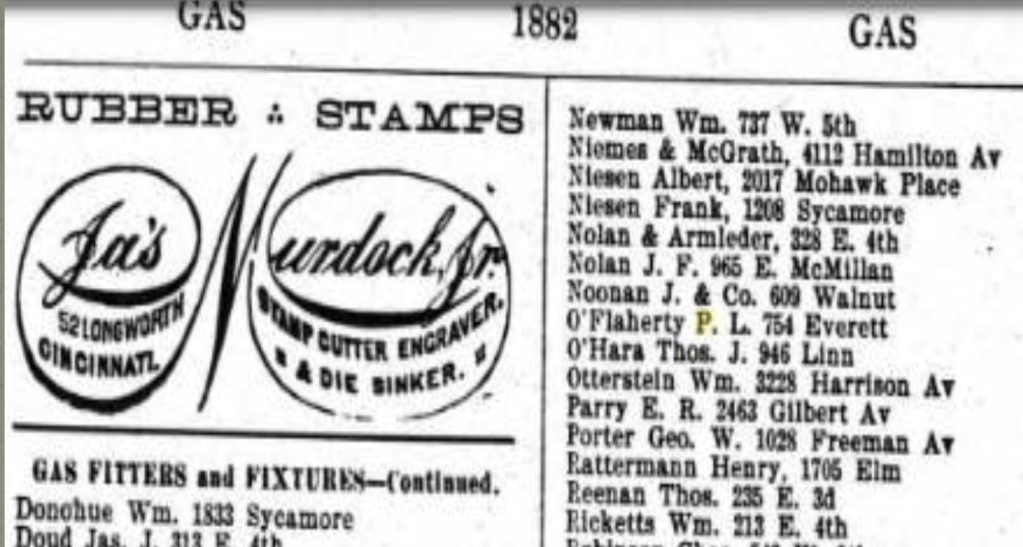
Deaths within the extended family removed emotional and economic anchors that had helped stabilize the household. Crowded living conditions, financial pressure, uncertain employment, and the burden of caring for multiple children created a crisis that overwhelmed the family’s ability to cope.
And so, one of the hardest decisions imaginable was made.
THE CATHOLIC ORPHANAGE SYSTEM
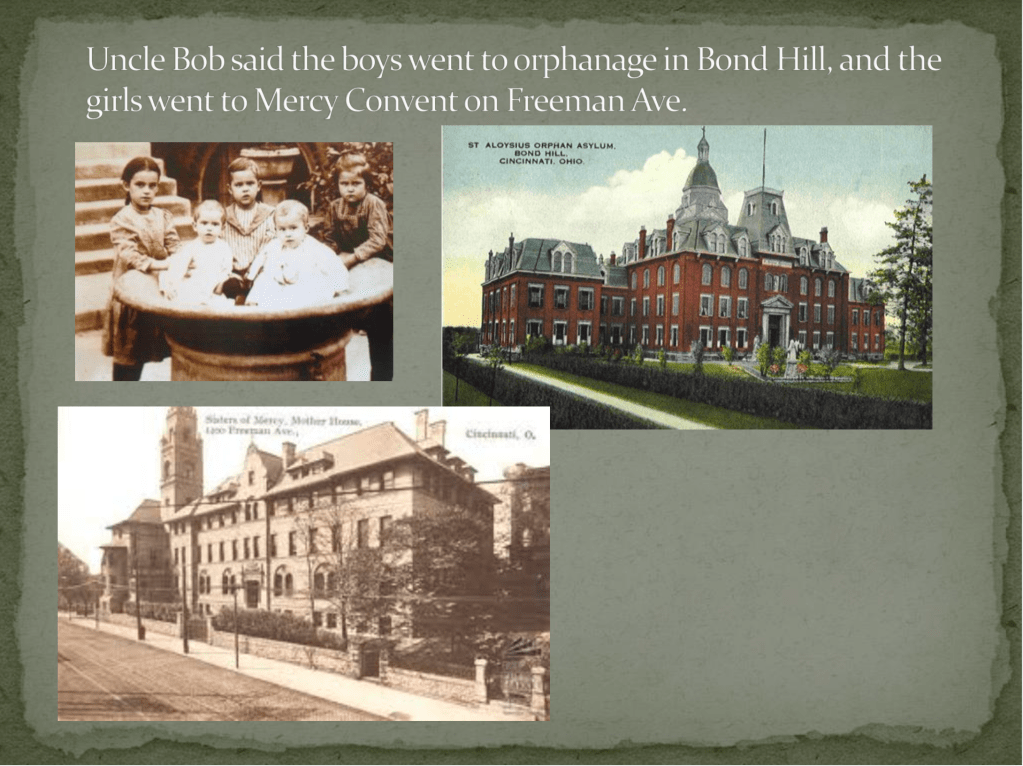
Today, many people misunderstand orphanages of the early twentieth century.
Most children living in orphanages were not true orphans.
Many still had one or both living parents.
Catholic orphanages often functioned as emergency survival systems for immigrant and working-class families overwhelmed by:
- poverty
- illness
- unemployment
- widowhood
- economic collapse
- housing instability
The Catholic sisters who operated these institutions became caretakers for thousands of children whose families had simply run out of options.
For the Wright children, the orphanage became a place of both heartbreak and survival.
One child, Joseph, died there at only five years old in December 1911.
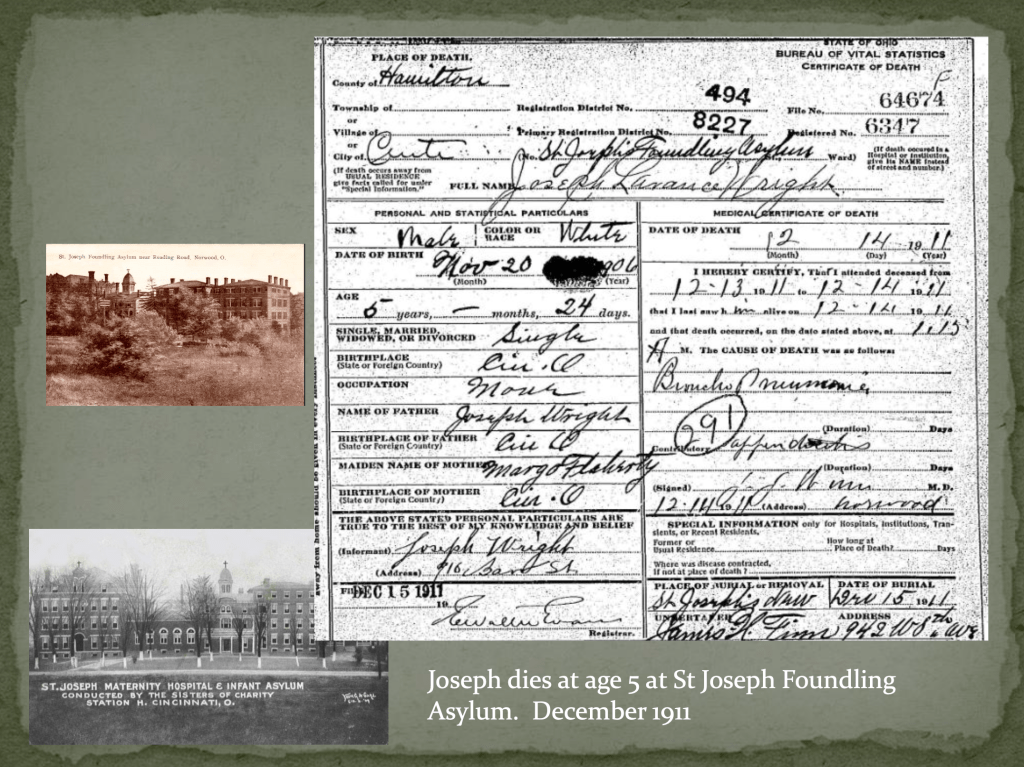
The loss left a permanent wound in the family story.
WHY DID MARGO GO TO CHICAGO?
Another mystery remained.
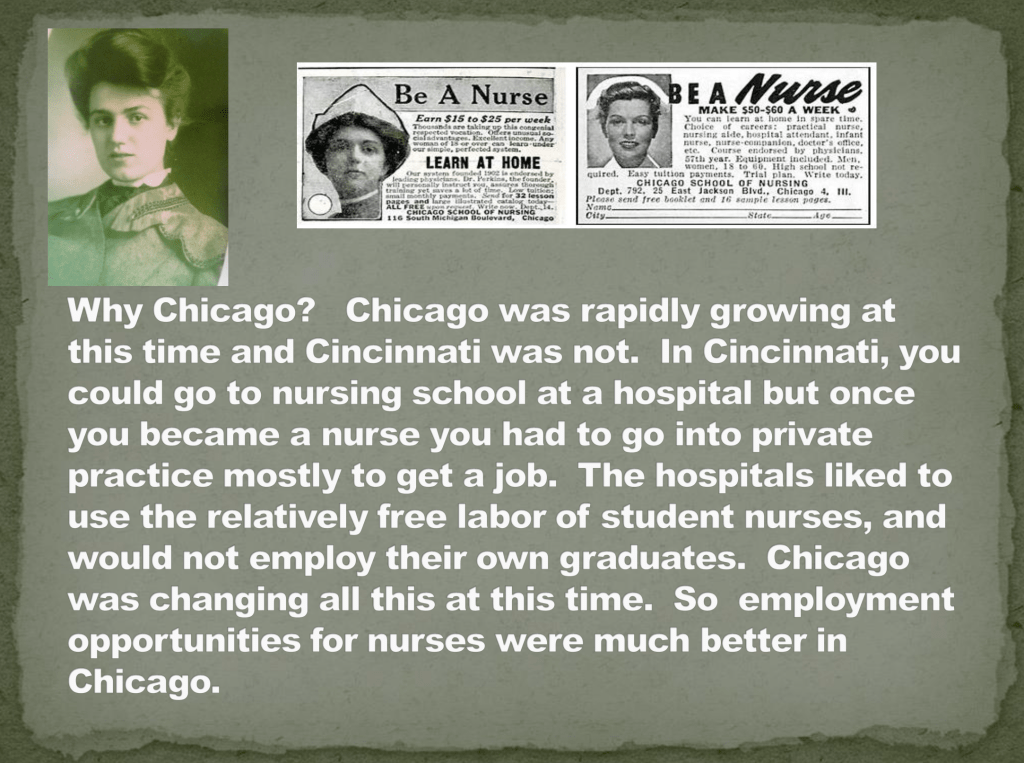
Why would a mother leave Cincinnati and move to Chicago while her children remained in institutional care?
The answer may lie in the changing role of women in early twentieth-century America.
At that time, nursing was becoming one of the few professional careers available to women seeking economic independence and stability. Chicago offered larger hospitals, expanding medical systems, and opportunities that may not have existed in Cincinnati.
Seen through this lens, Margo’s journey was not abandonment. Margo also had a sister May who had moved to Chicago. She might have been offering emotional and financial support to Margo. (Mary Helen (May) O’Flaherty married Tom McDonough in October 1909 and moved to Chicago).
It may have been an act of desperate hope.
A search for a path forward.
A mother trying to rebuild a future in the middle of overwhelming hardship.
THE CHILD WHO KEPT GOING
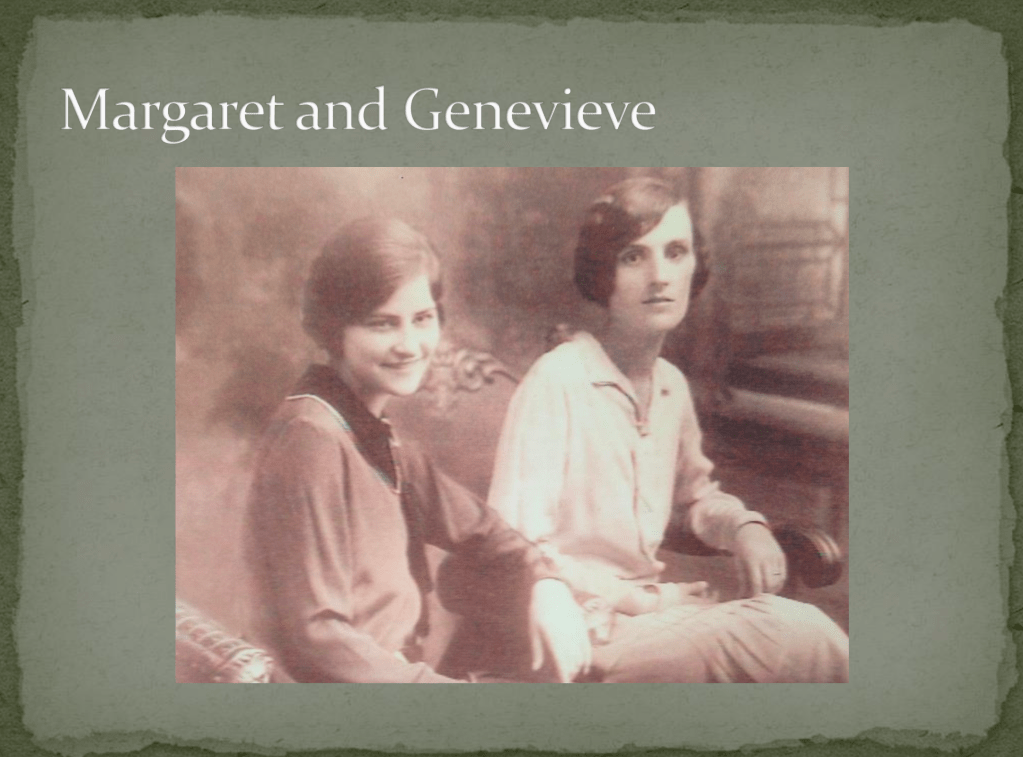
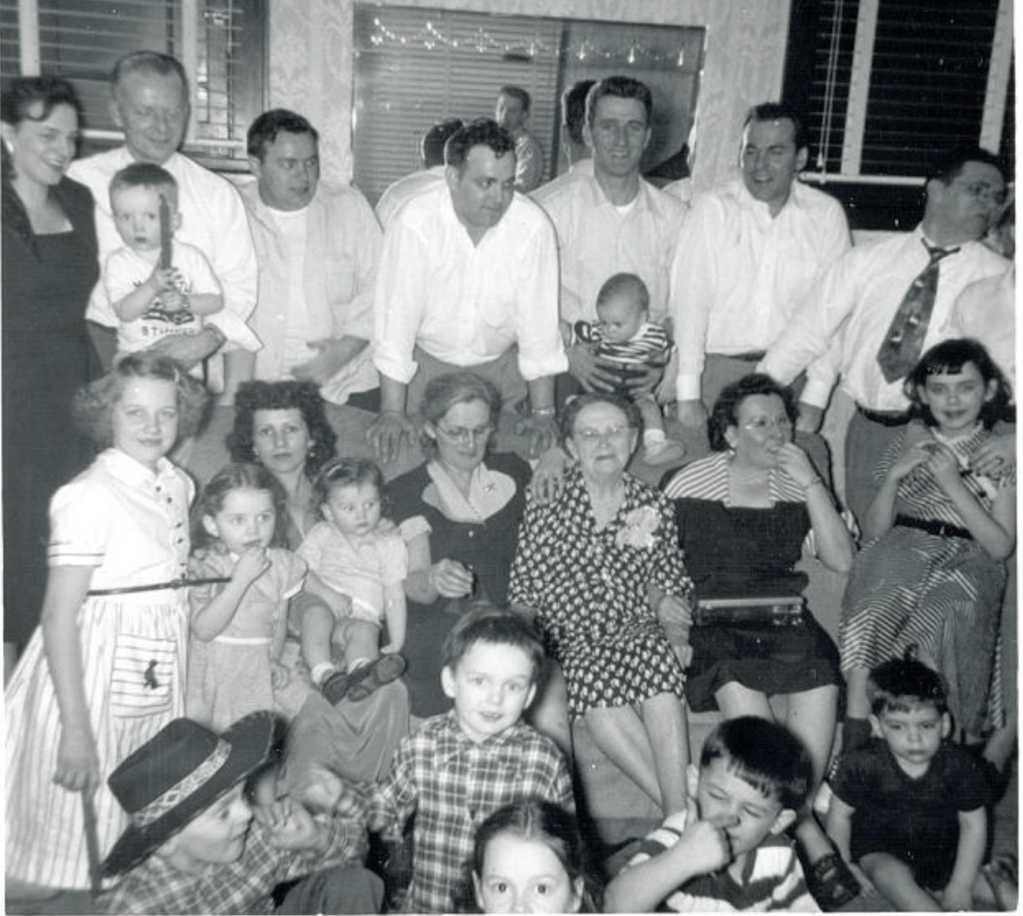
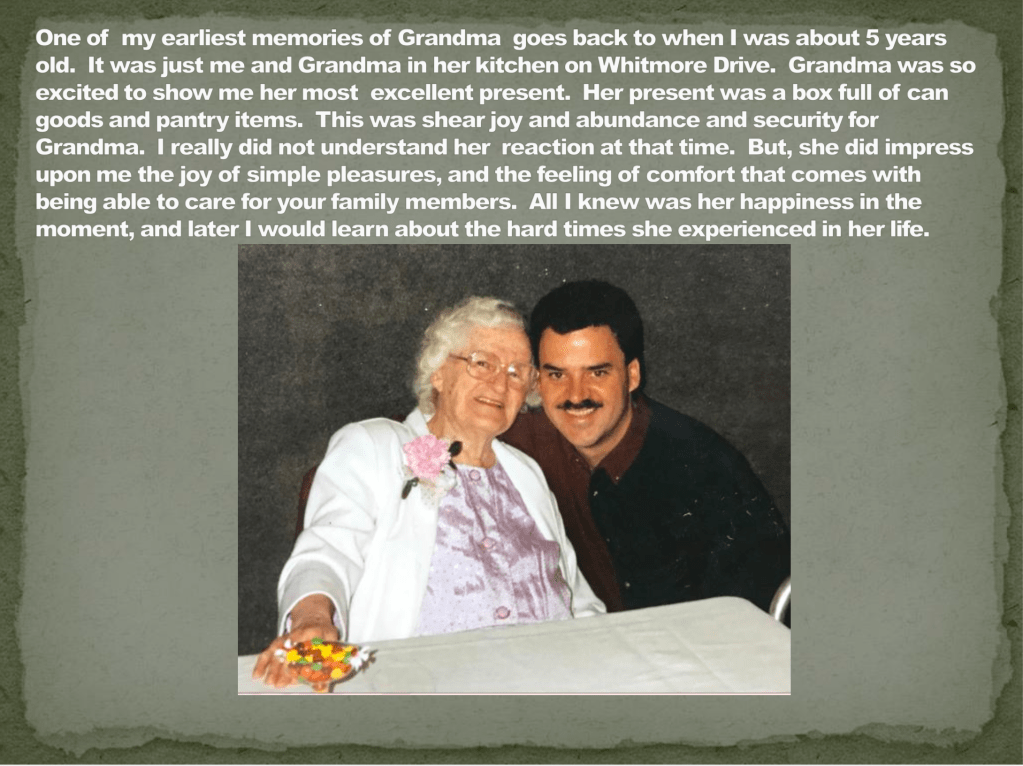
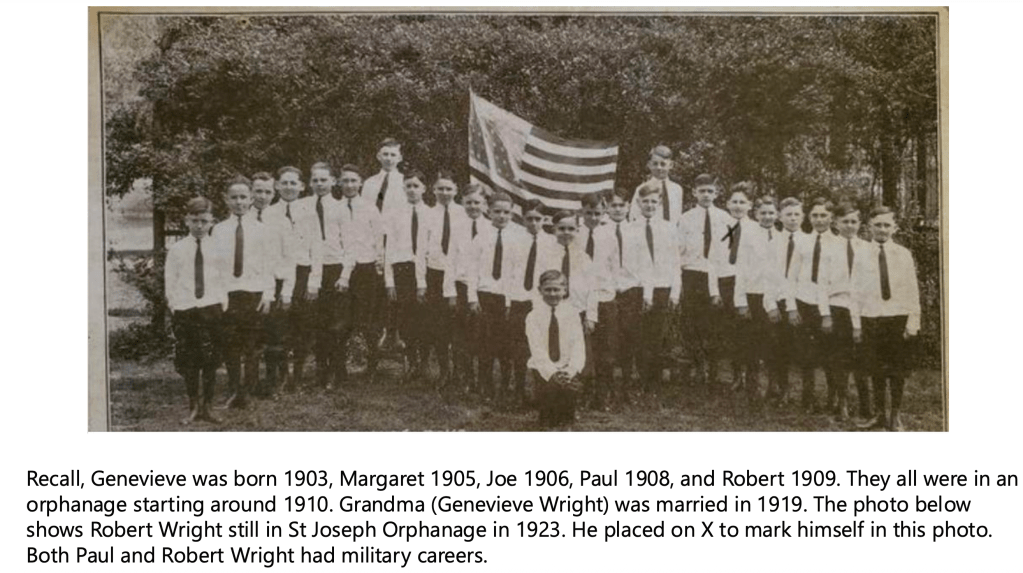
One of the children who passed through this difficult chapter was Robert Wright.
He grew up carrying the memories and scars of instability, institutional care, economic struggle, and separation.
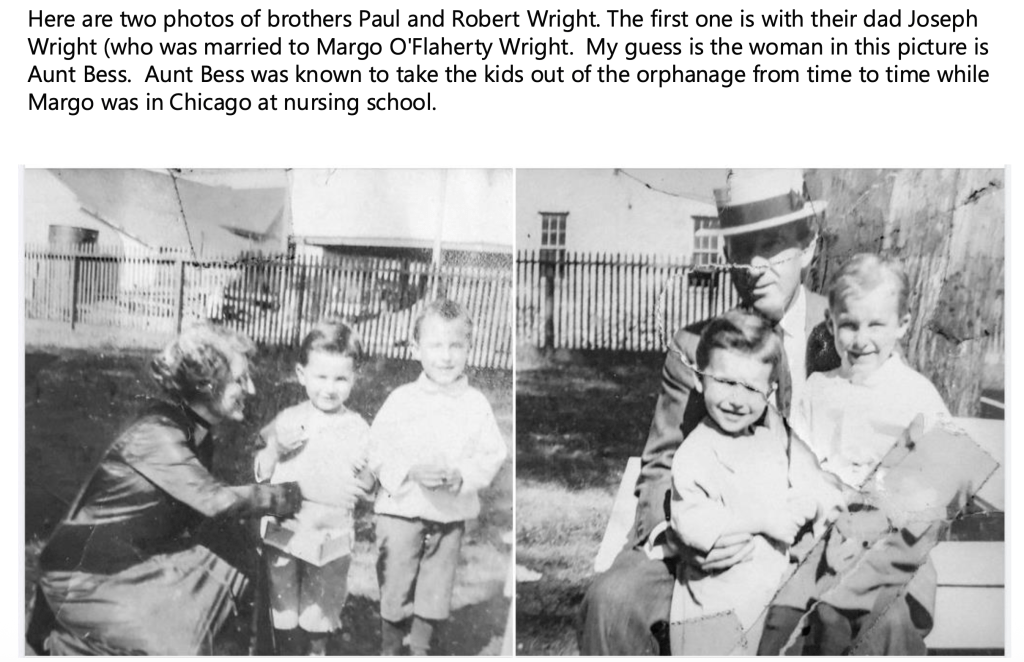
But he kept going.
As a young man, Robert joined the United States Marine Corps.
Eventually, he found himself swept into another world-changing event:
World War II.
ACROSS THE PACIFIC
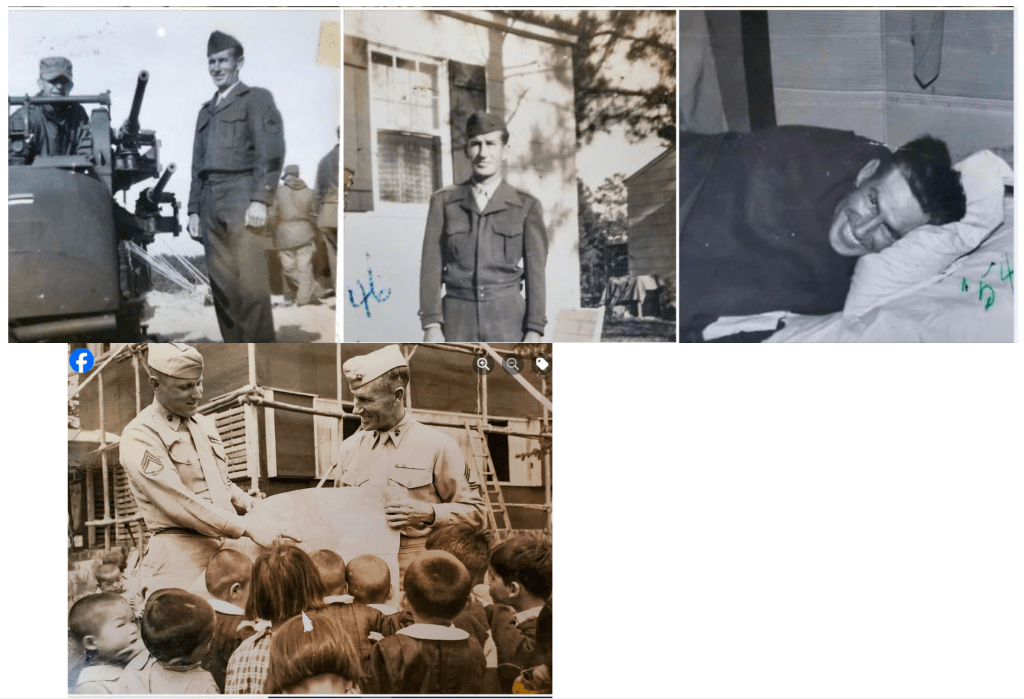
Robert Wright served in the Marines during the Second World War — part of a generation that crossed oceans and continents during one of humanity’s darkest periods.
The child who had once depended upon the care of Catholic sisters in Cincinnati now found himself participating in the rebuilding of a shattered world.
And then history produced an extraordinary moment of symmetry.
OCCUPIED JAPAN — 1954
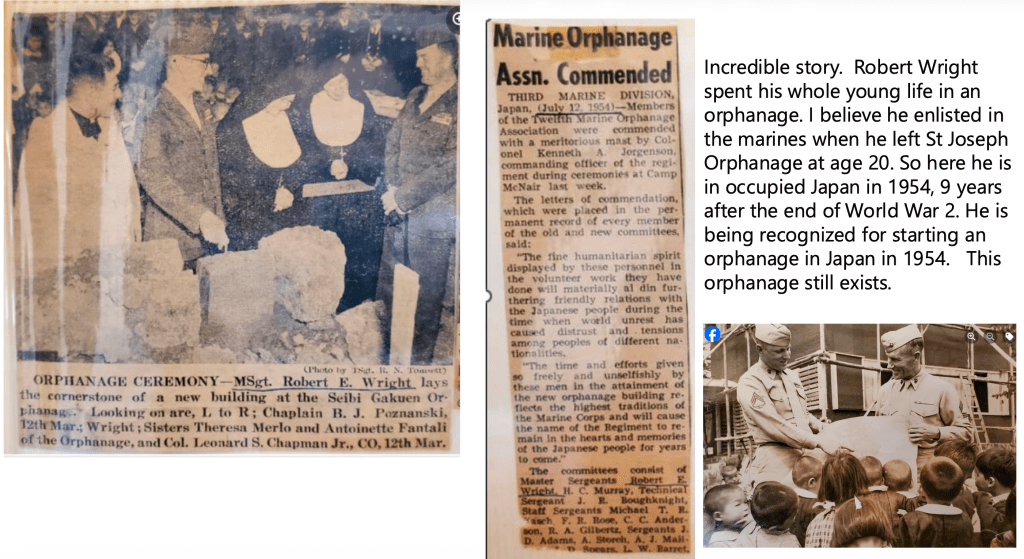
In 1954, while serving in occupied Japan, Robert Wright participated in the laying of a cornerstone for a new orphanage being built with the support of the United States Marines.
The meaning of that moment echoes across generations.
A child who had once lived in an orphanage…
helped build one for children devastated by war.
What must he have felt standing there?
Did memories of Cincinnati return to him?
Did he think about the sisters who cared for him?
Did he recognize something of himself in those children?
We cannot know for certain.
But the story itself says something profound about the human spirit.
INHERITED RESILIENCE
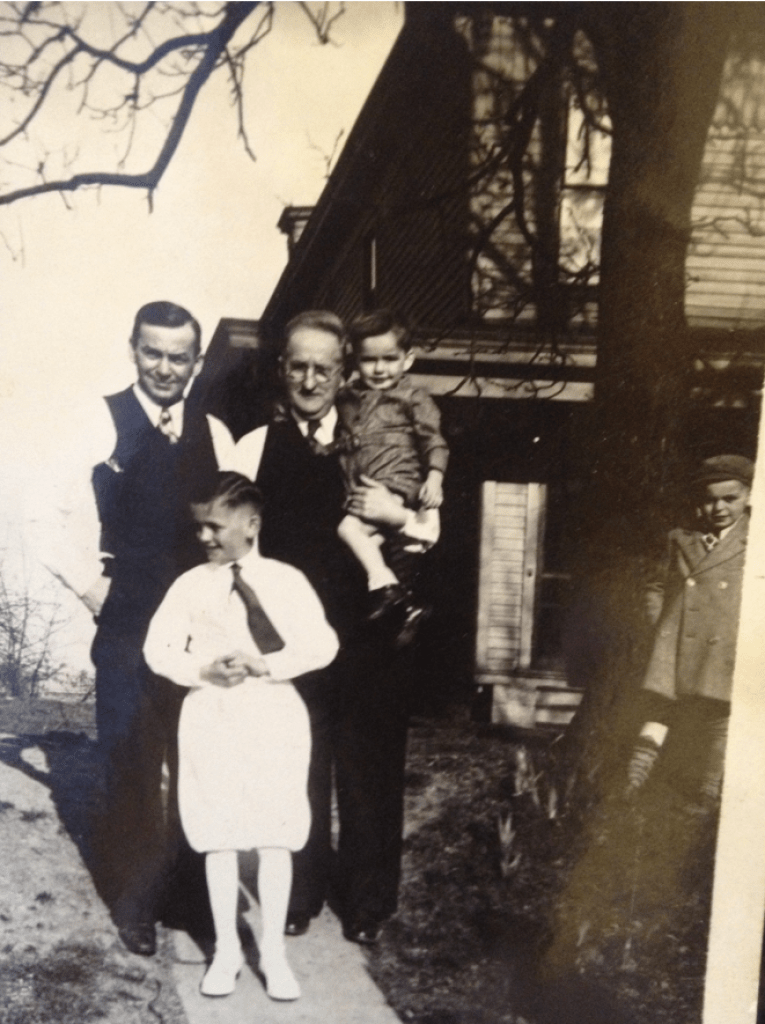
This story is not ultimately about shame.
It is not about failure.
It is about resilience under overwhelming historical forces.
It is about:
- immigrant families navigating industrial change
- parents making impossible decisions
- children surviving instability
- ordinary people enduring extraordinary hardship
Again and again, across generations, these stories ask the same question:
What can human beings endure?
And again and again, the answer emerges quietly through the lives of ordinary people:
They keep going.
They keep loving.
FAMILY CONNECTION
This story connects to the Wright, O’Flaherty, Gray, and Hensler family lines and reflects broader themes of immigration, industrialization, Catholic institutional care, war, survival, and inherited resilience in American history.
Click to access five_children_at_the_birdbath_poem.pdf
POEM by Uncle Denny
Click to access why_this_poem_matters_keepgoingkeeploving.pdf


Leave a comment