The Irish Famine, Galway, and the Ballinglass Incident
The Great Famine in Ireland from 1845–1852 became one of the most devastating human tragedies in modern European history. Millions of poor Irish families depended heavily on the potato because it could grow abundantly even on very small plots of rented land. When potato blight destroyed the crop beginning in 1845, entire communities suddenly lost their primary food source. What began as agricultural disaster quickly became widespread hunger, disease, eviction, and social collapse throughout Ireland.
The Ballinglass Incident in County Roscommon during March 1846 became one of the most haunting symbols of the suffering that surrounded the famine years. Landlord Denis Mahon ordered the eviction of tenants from the village of Ballinglass because they could not pay rent.
Families already weakened by hunger and poverty were forced from their homes while cold rain and harsh weather swept across western Ireland. Roofs were torn from cottages to prevent people from returning. Witnesses described mothers carrying children into ditches and fields with nowhere to go. The event shocked readers throughout Ireland and Britain when newspapers carried reports of the tragedy.
The Ballinglass evictions revealed that the Irish Famine was not only about crop failure. It was also about poverty, land systems, rent pressure, displacement, and survival. Entire villages across western Ireland feared eviction and starvation. Families faced impossible choices: remain and risk hunger, enter overcrowded workhouses, or attempt emigration across the ocean.
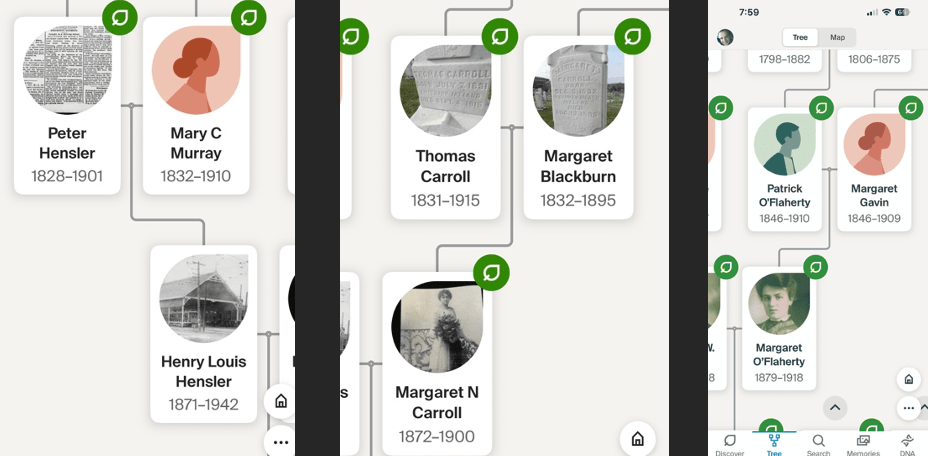
For the Hensler and Gray family story and the connected Irish family lines of Carroll, O’Flaherty, Gavin, and Murray, the historical timing carries deep emotional meaning. Patrick O’Flaherty was born in Galway during the same week the Ballinglass Incident unfolded. While Patrick himself was only a newborn child, the world surrounding his family would have been filled with fear, uncertainty, collapsing crops, rumors of eviction, and difficult conversations about survival.
Galway was one of the regions deeply scarred by famine and emigration.Families such as the O’Flahertys, Gavins, Carrolls, and Murrays carried forward the inherited resilience that became part of the Irish immigrant story. Many survivors eventually crossed oceans to America carrying little more than hope, family loyalty, work ethic, faith, and determination. The famine years permanently shaped Irish identity and left emotional scars that echoed through later generations.
For the KeepGoingKeepLoving project, Patrick O’Flaherty’s birth during the week of the Ballinglass Incident creates a powerful historical symbol. One child entering the world in Galway while, elsewhere in western Ireland, families were being forced from their homes during the opening shockwaves of famine. Suffering and hope existed together in the same moment. That contrast captures the larger Irish story itself — endurance, sacrifice, survival, and the determination to keep going despite overwhelming hardship.
The problem didn’t start with just a Potato Crop Failure. Penal Laws set the stage. These laws were broadly anti-Catholic.
The Irish Penal Laws and broader anti-Catholic policies formed one of the most powerful forces shaping Irish society from the late 1600s through much of the 1700s. These laws were designed largely by the Protestant Ascendancy after conflicts such as the Williamite War in Ireland and were intended to weaken the political, economic, and religious power of Ireland’s Catholic majority. Catholics faced restrictions on voting, holding public office, owning firearms, receiving formal education, entering certain professions, and purchasing or inheriting land in normal ways. Land laws were particularly damaging. If a Catholic landowner died, property often had to be divided among all sons unless one converted to Protestantism, in which case that son could inherit the whole estate. The result was a steady fragmentation of Catholic holdings and a concentration of power and wealth in relatively few hands. For many Irish families—including those whose descendants later emigrated to America—these conditions created chronic insecurity and reinforced a sense that advancement and stability were difficult to achieve within Ireland itself.
The statement, “But the most grievous imposition of all was the manner in which the middleman sublet his lands…”, describes an especially painful economic consequence of that system. The “middleman” was often a leaseholder who rented large estates from absentee landlords and then subdivided them into smaller parcels for ordinary tenant farmers. The process of “canting” — essentially competitive auction bidding — drove rents upward because desperate families competed against one another for access to land. As Ireland’s population expanded rapidly in the late 1700s and early 1800s, land became not simply property but survival itself. Families were willing to promise rents beyond what their farms could reasonably support because losing access to land meant losing food and livelihood. The phrase “forced the undertenants to contract to pay rents that would impoverish them” is largely accurate. Poverty did not arise merely from individual poor choices; it was often built into the structure itself. Tenants frequently worked harder and harder simply to remain in place, leaving little margin for crop failures, illness, or economic shocks. This system helped create the fragile rural conditions that later made Ireland extraordinarily vulnerable during the Great Famine.
For family-history work such as this KeepGoingKeepLoving project, this becomes important because migration often did not begin with the famine itself—it began generations earlier with people living under systems that steadily narrowed their options.
 thomashensler67f069fb13-jhukp
Leave a comment